


I’d heard about this wonderful wee festival that happens at the Highland Folk Museum every August – all about wood – but never made it along before (usually because it’s Edinburgh Festival season). But this year, I was lucky enough to have Forest Fest in my programme of activities for the Shared Stories: A Year in the Cairngorms project, so I was definitely going.
The Highland Folk Museum is a living history museum in the town of Newtonmore that demonstrates Highland life from the 1700s on. Established by the noted folklorist Dr Isabel Grant in 1935 it is now an award-winning free and open museum, drawing thousands of visitors ever year.

Forest Fest, supported by The Woodland Trust and Scottish Forestry, has been one of its special event days for several years now and is growing in popularity, with some people planning their holidays around it. It’s easy to see why. Alongside all the usual exhibits spread across the 80 acre site, the Fest brings together a colourful cohort of folk all demonstrating skills and passions centred around wood.

The main attraction is always Tarzan the horse, who helps his man Simon haul logs in the traditional way. Then there are the Sawdust Fusiliers Living History Group recreating the Canadian Forestry Corps who were based here during WWII; the sawmill; the small wooden boats called coracles paddling across the mill pond; opportunities to make traditional tinders and wooden crafts; guided woodland walks; bird-spotting and mini-beast hunting; and tree-themed storytelling.

And then there was me. In a damp barn in the corner with paper and pens. Well, it was easy to feel upstaged and drab next to all the woodland wonders happening beyond, and my cheerful signs about ‘creative writing for all ages’ seemed an effective repellent to most visitors. I know, I know. It all looks too much like school.
I was there, of course, with my Writer in Residence hat on trying to woo people into the woodland groove with a word or two. I had activity sheets galore and cunning plans to sweep folks off into the trees for sensory walks that segued seamlessly into poetry, snatches of travelogue and profound personal memoir. All right, all right, I’d be happy with just a few scratches in the dirt if only somebody would give it a try.

But gradually, they came. Especially when the rain bucketed down and my dark barn suddenly turned into an inviting haven. One wee boy threw himself at the colouring pens with gusto. No wafty tree pictures for him, this was Pacman! When I crowed with delight over another boy’s yellow rabbit, he told me scornfully it was Pikachu (another video game character, for those who have led a sheltered life.) But how could I despair when his little sister drew hearts and gave them to me with huge, melting eyes?
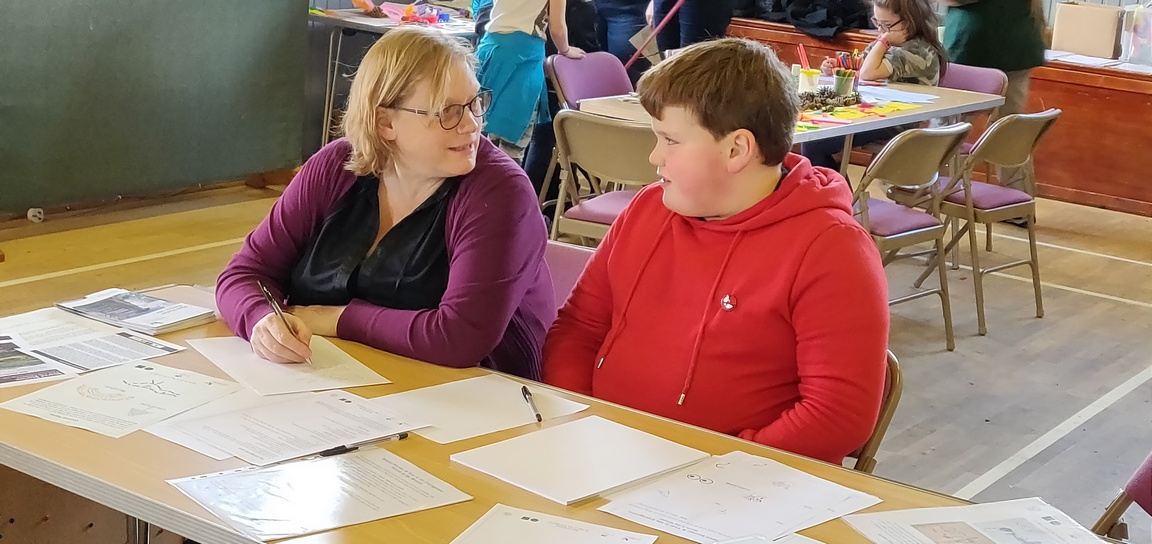
And then, slowly but surely, the writing stuff started to happen. A woman and teenaged daughter wrote a Cairngorms Lyric in Dutch and English. A wee fellow raced outside with his senses activity sheet and got Mum to fill in all the boxes; a beautiful little girl from Dubai took me with her to do the same. More kids took sheets, a few more adults had a go at nature poems.

The next day an outdoor shelter was free and I decamped there, maximising on the passing trade between the fabby Roots & Shoots women making wooden necklaces and the ice cream van. More folk came. Actually, most of them came when Liz English took over for half an hour. One of the museum curators, she kindly gave me a break to go on a tree discovery walk with Alan Crawford of the Woodland Trust. (Brilliant, by the way.) I returned to discover a veritable publishing house. The tables were awash with fully illustrated activity sheets and reams of rhyming verse. Always good to know how dispensable one is.

But it didn’t stop there. A French family came by to add their Cairngorms Lyric and two girls from Glasgow spent ages filling out their sensory sheets and writing poems from them. One attends a Gaelic-medium school and finished hers with a few lines of Gaelic.

The other took advice and inspiration from the young Edinburgh history graduate and emerging writer, Hazel Atkinson, who was a volunteer at the Fest helping with the storytelling. And that was the final gift of the day. Packing up, I found her poems lying quietly amongst the Pacmans and Pikachus. Two of the cleverest acrostics I’ve seen in a long time, they confirm that not only is she a writer to watch, but also – though it may not compete with Tarzan the Wonder Horse – ‘creative writing for all ages’ can make magic.

Losing my wallet was the last straw. The final sign, if any were needed, that what I was really losing was my marbles. It was the climax of a catalogue of cock-ups and memory lapses, of a comedy of errors that had been playing out for several weeks, but long since stopped being funny. I’d taken on an extra piece of work that had burgeoned into something much bigger and more complex than I’d thought, with tight deadlines and high stakes.
That, added to the Shared Stories project, my other writing work, several personal challenges and the usual domestic circus, meant life had become overwhelming. It felt like a vice was tightening around me and I couldn’t get a single thing right. Not only was I forgetting, losing or making a mess of things, but I could barely put two words together. The final indignity for a writer: I was losing the plot.
An underlying source of this stress is the deepening sadness that my Cairngorms novel Colvin’s Walk is still without a publisher. That awful waiting is an experience so common to writers, and yet it never loses its pain, for at its core is the growing fear that your work is not good enough. That you are not good enough. This May marked a year since my agent, Cathryn Summerhayes of Curtis Brown, took on the novel; in the same month she won Literary Agent of the Year at The 2019 British Book Awards. She’s undoubtedly good enough. Has my novel proved too much for even her considerable powers? I try to reassure myself that an agent of that calibre and experience would not have taken it on unless she believed in it. So why, why, why…?
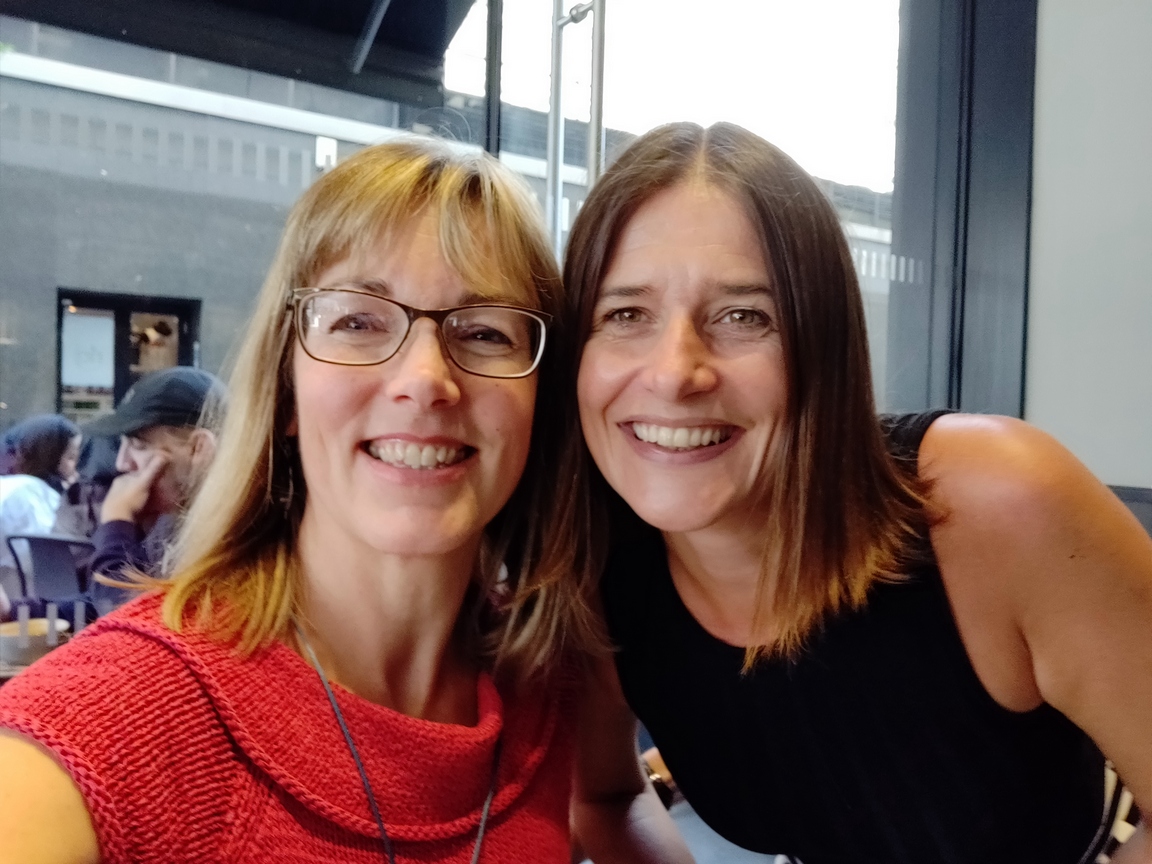
When we met last September, Cathryn said agents have their heads in their hands trying to sell literary fiction at the moment; it’s just not deemed commercial enough. This is true, but clearly some literary fiction is being sold. Just not mine.
So I don’t know why. All I know is that it’s a story that took me nearly five years to write and however unsaleable or strange, I still yearn for it to be told; it’s a story I think about every day.

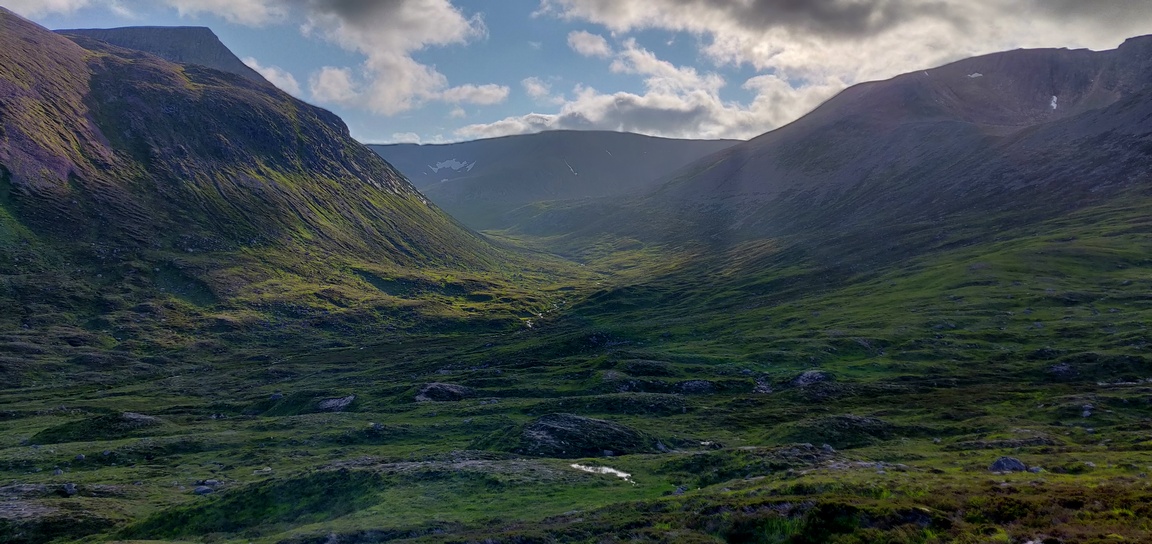
In that story, shepherd Colvin disappears, leaving twelve of his possessions in a meandering trail across the landscape, their discovery gradually revealing the story of his life and the mystery of his going. His brother Sorley finds the last one at the top of a mountain in the Cairngorms. The Gaelic name is Sgòr an Lochain Uaine – the peak of the small green loch – for it rises above a corrie that cups a dark pool, so high it is hidden until you are beside or above it. In English, it is The Angel’s Peak.
I chose it for those names and for its remoteness and beauty, but relied on internet walk reports and photos for description, as I had never been. This year – Alistair and I promised each other – we would go. I started the novel at 3am on midsummer’s night six years ago and for a long time its working title was The Shortest Night, not just because of its genesis, but also because it is the night when Sorley climbs the mountain.

One week after my lost wallet, it was the 21st of June, but we were committed to Solas Festival that weekend. Two weeks later, Shared Stories activity finished for the summer and though I had a mound of other work and writing I wanted to do, I knew I needed a break and to take stock. I knew I needed a mountain.
In a serendipitous gift, the diaries and the weather were both clear enough that first weekend in July and suddenly the thing I’d been saying for ages I wanted to do looked like it might actually happen. We started gathering our under-used camping kit, borrowing and buying to fill the gaps, and plotting the route. Extremely fit walkers can get up Angel’s Peak and back from Speyside in a long summer’s day, throwing in the neighbouring Munros of Cairn Toul and Braeriach for good measure, but I’m not one of them. Nor do I want to be. Why tear round the hills as fast as possible, beating myself to a pulp in the process? What’s the point? I’m not bagging Munros or doing mountain marathons; I don’t need to win or prove anything. In fact, the opposite.

I need to lose.
Not my wallet or my composure, but all the illusions that keep creeping back and tying me up in knots.
I need to give up.
Not on writing, but on the pushing and pressure – internal and external, the straining to achieve, the seductions of so-called success.
I need to walk into the mountains.
Not to conquer but to surrender, to find myself at the mercy of things greater than me; to go to the rock that is higher than I.
As loyal readers of Writing the Way, I thought you might enjoy this recent article by Roger Cox, Arts & Books Editor of the Scotsman Newspaper. It is copyright of The Scotsman Publications and is being used with their kind permission. All images, unless otherwise stated, are my own.
Forget haiku – Cairngorm Mountains inspire new type of poem
Merryn Glover, author, poet and educator, is sitting in a cafe in Edinburgh’s New Town, telling me about “The Cairngorms Lyric”– a new poetic form she’s devised in her role as writer in residence for the Cairngorms National Park. “Initially it came from the idea of a haiku,” she says, “and what Allen Ginsberg did with that, the American Sentence, which he thought was more fitting for American culture. [The American Sentence was a single sentence of 17 syllables.] “I thought, ‘Why can’t we come up with a poetic form that’s unique to the Cairngorms?’ So the idea of the Cairngorms Lyric emerged.”
The rules, she explains, are deliberately simple and the idea is that “everybody and anybody” can have a go at writing one. Rule One: a Cairngorms Lyric must have 15 words – not syllables, as it’s easier for kids to count words. Why 15? “The 15 comes from when the park was established in 2003. There are five local authorities, five of Scotland’s ten highest mountains, and five of Scotland’s most iconic rivers flow out of it – so three times five is 15.”

“The second rule is that it has to include an element of nature in the park,” she continues, “and the third is that it needs to include one word of non-English origin, so Gaelic, Scots, Pictish… those languages are all there in the local place names and even if you use the word “loch” you have one. But the one word can be in any language, and we’re encouraging people to write the whole poem in their own language if they want to, partly just to push back against the dominance of English and partly to celebrate the linguistic heritage of the area and also the contemporary linguistic diversity.”
Glover, who lives in Kincraig, took up her writer in residence post at the start of the year, and in the last few months she has held writing workshops for adults and schoolchildren all over the Cairngorms National Park, from Aviemore to Tomintoul, under the banner Shared Stories: A Year in the Cairngorms. Her residency is co-funded by the Woodland Trust, the Cairngorms National Park Authority and Creative Scotland, and it allows her to spend 70 days doing education and outreach work and a further 30 days working on her own writing. One of the Park’s priorities, she says, is strengthening people’s relationship with the natural environment, so, wherever possible, she’s been holding workshops in the open air, in Abernethy Forest, for example, or on the banks of the River Spey.

Of course, trying to quantify the outcomes of projects like this is a more-or-less impossible task: “After attending this workshop, would you say you felt your relationship with the natural environment is a) stronger, b) weaker or c) about the same?” However, anecdotally at least, the workshops certainly seem to be popular, with some people even travelling from outside the park in order to attend.
My favourite story, however – and a great advertisement for the power of the Cairngorms Lyric as a literary leveller – involves a workshop Glover ran in a primary school.

“In one of the workshops I do in schools I start with this activity of getting the kids to put themselves on the spectrum in terms of how much they like being outside and how they feel about writing,” she says. “I tell them, ‘if you love writing go to that end of the room, if you hate writing go down that end.’
“So at one school there was one wee boy who was all the way down the far end for loving being outside, but then for writing he went all the way to the other end, shot out the door, went all the way down the corridor and he would’ve been down the fire escape if it hadn’t been for his teacher running after him and getting him back in. But he ended up just churning out Cairngorms Lyrics at the workshop and really having a fun time. He just couldn’t contain himself by the end, writing all these lyrics and desperately wanting to read them all out.”

At the end of her residency, Glover is hoping to publish a book of writing by the people who have attended her workshops, both poetry and prose, and she is planning to use her 30 days of dedicated writing time to work on her own poetry. In terms of a lasting legacy, though, look no further than the Cairngorms Lyric, which, you can’t help feeling, could be around for some time to come.

Namaste!
Most of you probably recognise the word, some of you use it in yoga classes and some may even know what it means. Pronounced num–ah-steh it is the commonest greeting across the Hindu world, usually with palms pressed together, and serves as both hello and goodbye. It’s been part of my vocabulary from childhood as I was born in Kathmandu and grew up in South Asia, so I love hearing it whenever I go back to my beloved Himalayan countries, and I use it as the sign-off for my newsletters. I was amused, therefore, to discover it recently in this Cairngorms Lyric from a workshop participant:
 The wind blows, the trees move,
 A bird swoops upwards gracefully,
 SPLAT! Wind turbine.
 Namaste!
One of the three rules of this new poetic form, arising from the Shared Stories project, is that at least one word must be of non-English origin. A very intelligent teenager in a workshop I was leading for Moniack Mhor Young Writers, rightly pointed out that most of the English language has developed from other sources. So it has, and remains all-embracing in continuing to absorb words from everywhere including street slang, tech and the constantly evolving vocabularies of popular use. And that’s the point. If people use them, words inevitably become part of the language.
Despite what English teachers, Scrabble players and other pedants (I’m all three) might insist about what is or isn’t a ‘real word’ or ‘proper English’, there is no legal boundary. Even the Oxford English Dictionary doesn’t own the language; it merely seeks to record it. We do have a thing called ‘Standard English’ and it’s useful for people to learn, as it’s the medium of much information and power, but all the other forms of this vast, sprawling, boundless tongue are not incorrect or inferior, just variations on a constantly changing theme.
But that vastness is part of the problem. English is a great river into which all the words of the world can run, but it also threatens to flood them, to dilute the richness of other languages and to drown them out altogether. Language loss is happening at an alarming rate across the globe. I say alarming because language is a profoundly important expression of culture, and to erase language is to erase a people’s distinct voice and with it, much of their history, literature, song, beliefs and practices. Increasingly, diverse ethnic groups are being absorbed into ever-dominant and homogenised cultural monoliths, and quite often, language is the driver.

Sometimes, this is because ethnic groups rightly recognise their need of the national and/or English language in order to access education, work and influence, and without it they are disadvantaged. At other times, national policies have enforced use of the state language and punished use of indigenous languages and dialects, as happened with Gaelic in Scotland. For both these reasons and more, English is increasingly dominant world-wide, and though I support everyone’s right to learn it to meet their needs, I am also passionate about reinforcing linguistic diversity.
That is the reason I was very keen from the outset of the Shared Stories project that we encourage the use of other languages. This includes the heritage languages of Scotland – Gaelic and Scots – but also all the others spoken by residents and visitors in the Cairngorms National Park. One of the activities I run in schools involves looking at Gaelic, Scots and even Pictish words for landscape and nature, as explored in the Place Names of the National Park leaflet and map, and several books including Amanda Thomson’s wonderful compilation A Scot’s Dictionary of Nature.
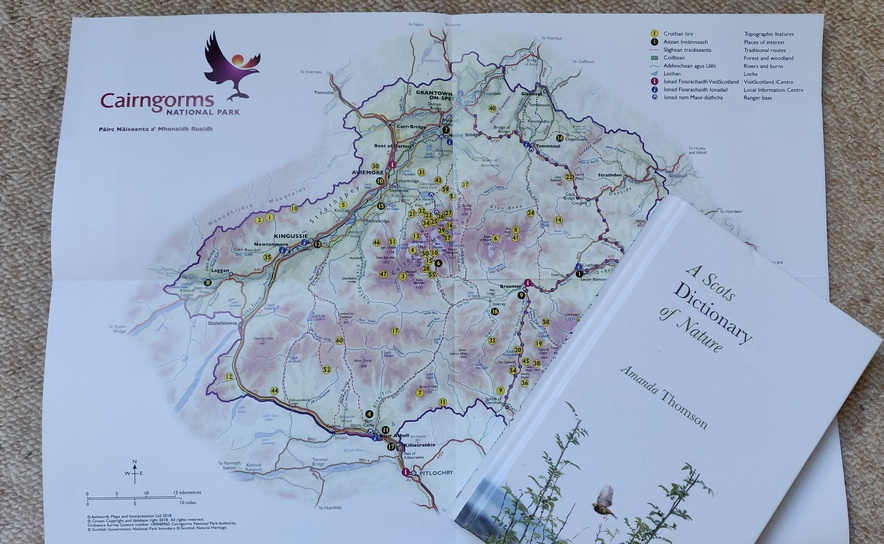
And that is why the Cairngorms Lyric must have at least one non-English word. That’s not difficult. Just mentioning a loch or Ben Macdui or a ‘wee’ bird will do it. But many people have enjoyed digging deeper and drawing from the rich meanings of the place names and old words. Loch Mallachie means The Loch of the Curse; Càrn an Tuirc is the Mountain of the Wild Boar. Other people, wonderfully, have included words from other mother-tongues or languages they know. Sometimes, as in the namaste above, they are just a single word. A Welsh boy delighted in having his own country’s greeting in the middle of his lyric:
My feet squelched through wet mud
 “Bore da!”
 I cried to the squirrels and birds.
 - Eoin Jones
But the rules of the Cairngorms Lyric mean the entire thing can be written in another language. When I said this at the workshops I led for school groups at the Rural Skills Day on Monday, faces lit up. Two Polish teens wrote poems that were a mystery to me but had them rolling with laughter; another teen wrote in her native Spanish, which impressed her pals no end; another teamed with a friend to work on the English version together and then she wrote the Polish, which her friend copied down. I loved the way these responses not only reinforced the young person’s use of their language but brought celebration and respect from their peers.

Then in the beautiful Abernethy woods on Wednesday night I led a workshop with teachers and other practitioners for the wonderfully named OWLS: Outdoor and Woodland Learning Scotland. One participant spoke of how Gaelic words for colours were so much more expressive to her. Another read her Lyric in French, filling our forest glade with sounds that, even if we didn’t understand them, were beautiful. “We don’t understand what the birdsong means,” I commented, “but we still enjoy it.” A Danish participant spoke of how glad she was the project embraced other languages and it led to a discussion of the rich potential of drawing from all the languages in the classroom and the many extensions activities such as audio recordings and learning about translation.

And so I invite, I encourage, I urge YOU to join in the project, in your own tongue, and to share the richness of your language and voice with all of us. Come along to a workshop or send us your writing about the nature of the Cairngorms to share on our website and our end-of-year anthology. We want to hear you!
Namaste!
Staff away days can be notorious for press-ganging resistant folk through ‘team-building’ exercises like tying Betty from accounts to intern Joey’s back and asking them to leap-frog across the Director in a muddy ditch. Or, just when they’re all filthy and furious, getting them to role-play conflict resolution while onlookers keep score. You might have endured one yourself. Or even organised it. But have you ever been at one that involved writing poetry? The thought may be more excruciating for you than any number of Tough Mudders or office pantos, but hats off to Grant Moir, CEO of the Cairngorms National Park Authority, for giving it a go:
“After reading Merryn’s blog and trying my hand at a Cairngorms Lyric via twitter I thought it would be great to get all the staff at the CNPA to do one. We met for an all staff away day at Glenmore Lodge on the 3rd April which was practically the only snowy day of the year. As an icebreaker (quite literally) I asked all the staff to write in 10mins a Cairngorms Lyric. The rules were explained and everyone really got into it. The results really show the absolute love that folk have for the cairngorms, the nature, wildlife and culture. It was great to do something a bit different.”

Grant then dropped me a note: “Merryn, I have 58 Cairngorms Lyrics from staff! If you could judge the best one that would be great. I am donating a bottle of whisky or gin to the winner.” To be fair, he had asked me first and I was delighted to agree and even more so when I read through the poems. What an astonishing collection of images, emotions and personalities shone through those short pieces, and what a magical way to get a feel for the big and varied team that make up the Park staff.
The genesis and rules of The Cairngorms Lyric are explained here, but in essence, it is a new poetic form invented for the Shared Stories: A Year in the Cairngorms project and is made up of:
– 15 words
– an element of nature
– at least one non-English word

Reading all 58 poems was a dream, but trying to judge a winner was a nightmare! I spread them out on my living room floor, re-read and re-arranged them several times, left them there for several days and dragooned my husband into reading the short-list (a marital team-building exercise). I was struck by several things. One was how powerfully many of the Lyrics expressed the sense of the Cairngorms as home, as in Charlotte Milburn’s above and the one below.
Hame
Crawling up the A9
 Brown turns to hazy hues of purple
 Cairngorms…
 I am hame!

Kate Christie

Several participants took the opportunity to express more political views about the environment, but the issues are sensitive, so I can’t print them here. There were several that enjoyed the opportunity for humour, and some couldn’t resist a little dig at the process:
Snow is falling on Glenmore Lodge.
 It’s cold and wet.
 Is that it yet?
 *Slange.
*Slange or sláinte is Gaelic for ‘health’ or ‘cheers’. Perhaps that writer would have preferred leapfrog. Or something else entirely:
Snow is blanc, squirrels are red.

How I wish I was

at home in bed.

I loved the number of pieces that captured a strong, fresh sense of the natural world:
The osprey in a stramash of water and feathers as it landed the fresh salmon.

Donald Ross
Battle scarred, bleak hills
 slowly greening, growing, gathering
 a cloak of wild on the woods – healing.

Emma Rawling

If I’m not careful I could end up typing out all 58 of the CNPA Cairngorms Lyrics, because I enjoyed them all so much, but I will settle now for sharing my favourites. This one perfectly captured a Scottish mountain-top experience familiar to so many of us.
Coorying behind a cairn
 Cold wind hurtling
 Eyes squinting
 Lashes filtering snow
 Grimace, Brace, Go…

Nancy Chambers
I loved the riddle in the following Lyric and the memory of happy summers with my own kids. Can you guess what it’s about?
Hunters
Guddling about, searching, hunting.
 Concentration, competition, down on hunkers.
Satisfaction, blue tongues and lips.
Harvest.

Emma Stewart

Finally, the winning poem stood out for me right from the beginning and stayed at the top of my carpet line-up for the three days. It is reminiscent of haiku in the vivid image of the opening line and the ‘cut’ in the middle that suddenly broadens the perspective: a fleeting moment of bright birds in their antics is set against the ancient time of the wood. Wow. A breath-taking Cairngorms Lyric.
Redpolls and siskins upside down in the birkin branches;
 In the forest many lifetimes deep.

Carolyn Robertson
Why not have a go at writing a Cairngorms Lyric yourself? If you do, send it in to us for possible publication on the CNPA website or our end-of-year anthology. Click here for how to do that.
It is the beginning of April and, here in the Cairngorms, the beginning of lambing. Everyone up here knows about the notorious ‘lambing snows’: that no matter how lovely the weather before-hand, the moment the next generation of sheep start to emerge, skinny and vulnerable, the snow will return.
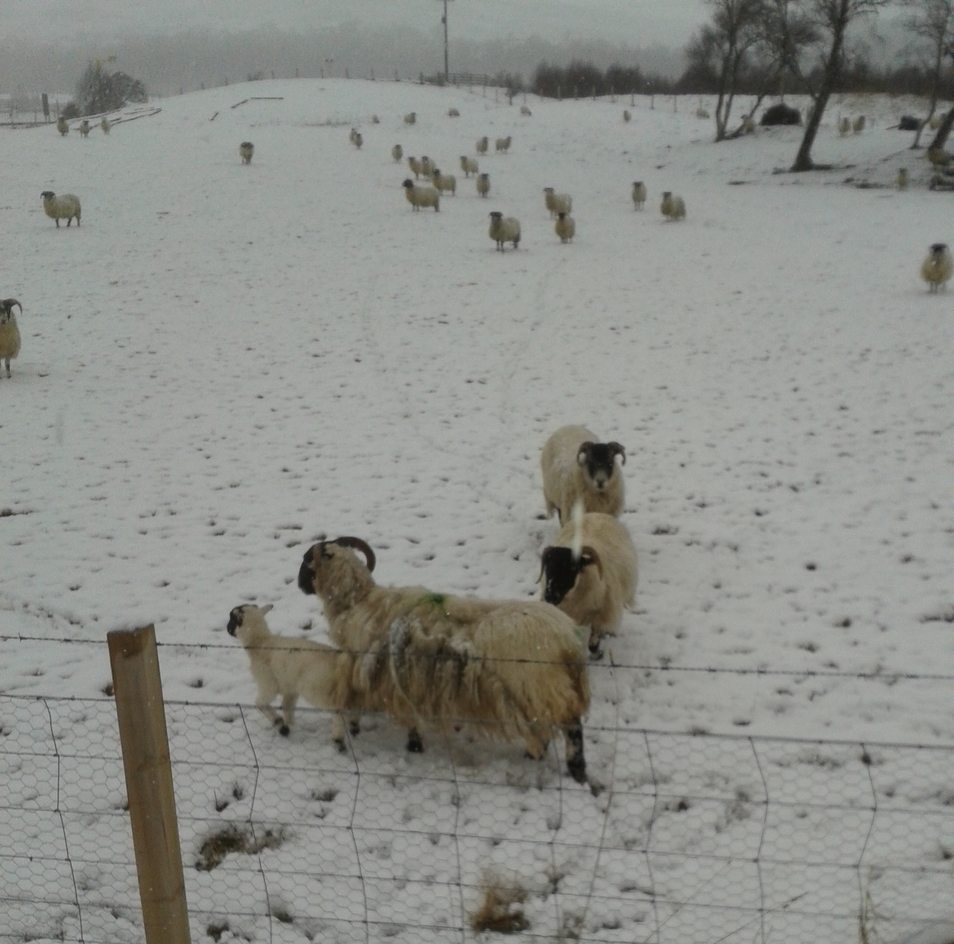
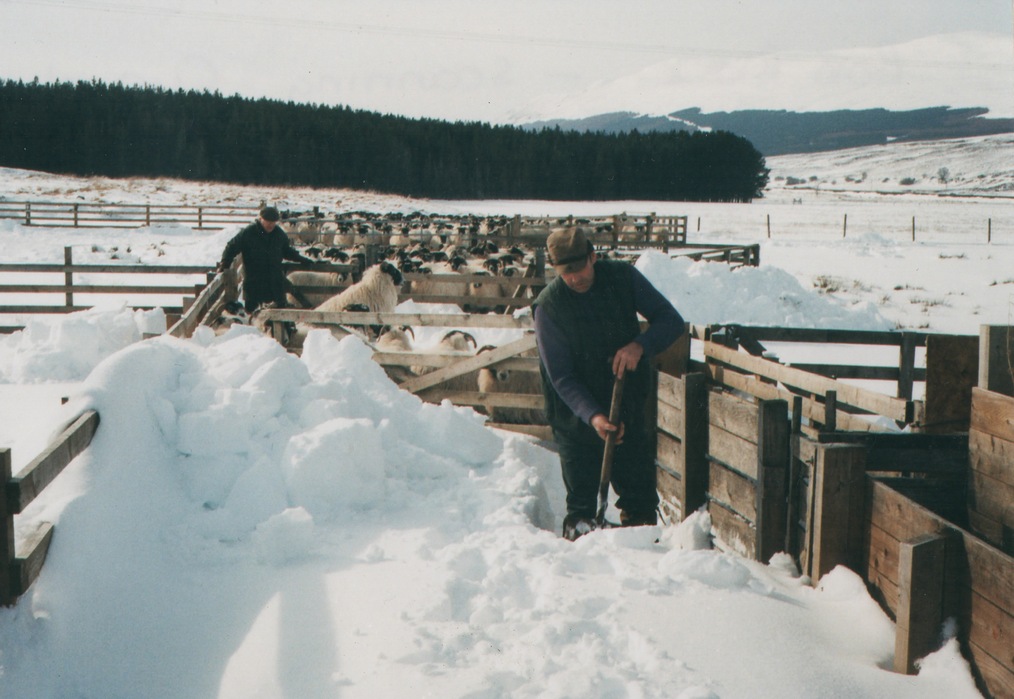
In my research for my second novel, Of Stone and Sky, I was privileged to accompany several local shepherds on their rounds through the year including lambing. Most of my outings were quite pleasant, but the central character in my story had a much more brutal experience, starting with his birth. That passage is below, to whet your appetite for the whole novel, if not a job as a Highland shepherd!
Birth
He was born on the farm, in the shed, on a cruel night in April 1955. Aye, without a doubt the cruelest month, April, wooing you with her bright face and warm breath till you are in her arms, puckering for a kiss, and she slaps you. Hard. Never more cruel than in the Highlands, neither, where our daffodils can be slashed by hail or our Easter eggs buried in snow. A Pentecostal month, if ever there was one, swinging from ecstasy to exorcism at the spirit’s whim.
The night of Colvin’s birth was wild with sleet as his mother, Agnes, struggled out in the field with a bulky jacket over her nightie and a torch strapped to her head, helping a ewe. The wretched beast was caught in a barbed-wire fence and bleating into the storm. Agnes pulled her father’s knife from her pocket, cut away the tangled fleece and guided the ewe into the shed, laying her on her side. Pushing a hand into the tight wet of the birth canal she came at once on the hooves of a lamb and drew them down slowly, feeling for the head, tugging and twisting, till the slimy creature squeezed forth, trailing afterbirth. Pulling a scruff of fleece from the ewe’s side, she wiped his black face, put him to the mother’s nose and with pain surging up her own belly, reached in again. The second one came quicker, sliding onto the straw with a sneeze and a dribble of bloody waters, his useless legs tucked under him, face smooshed to the floor. As the ewe lumbered to her feet for the first lamb to suckle, Agnes rubbed and prodded the second one till he tottered to his mother’s face and also got a welcome slurp. Our shepherdess then lumbered to her own feet, stomach tightening like a belt of steel, and after washing her hands in the freezing water at the corner tap, she made a cut in the ewe’s horn. The storm outside was a blizzard by now, blocking any return to the house, so she lit a fire in an iron trough and stomped around to keep warm and fight the pain.
She was a practical woman, Agnes; Traveller’s daughter, shepherd’s wife, angel unawares. Her jacket pockets held not just the knife and matches, but also twine, a fresh hanky, work gloves, some pegs, hair pins, a couple of nails, a pen that didn’t work, one that did, shop receipts, scraps of paper, a small telescope, a letter from the council, coins, a dog whistle, dried up sprigs of heather, a mouth organ and a crumbling bit of flapjack. While waiting for the baby, she cut a length of twine, sterilised the knife in the fire and set them down on the hanky. Her own family had never gone to hospital for anything and she had helped with several of her mother’s deliveries, as well as years of lambing, so was calm and breathed deep, groaning through her teeth, till she finally brought our Colvin into the world on a bed of straw. There were no singing angels or visiting kings, and the only shepherd – apart from herself – was snoring in his bed, pickled in liquor and dead to the world.
Ahh, Colvin, what a time to be born.
When he slithered forth head first and howling, she cut his cord and tied it off with the twine, struggling with frozen white fingers, then rubbed the hanky over his face and burrowed him inside her layers of clothes. He was slippery warm and wriggly, snuffling as his jaw worked the ripe swell of her breast. Touching her finger from her tongue to the top of his head, she murmured in Gaelic. A small drop of water to encompass my beloved, Meet for Father, Son and Spirit. The rhythmic tug of his feeding and the sounds of fire and suckling lambs finally pulled her into sleep, where she dreamed of a Traveller’s tent with rain pelting the canvas and her father singing.
It was the cold that woke her: the sharp iciness of her feet in their wellies, the draft around her head, the ache of her limbs. Breathing in Colvin’s womb-dark smell, she wound him in her scarf and tucked him beside the lambs, then scooping the straw and afterbirth into the trough, she re-kindled the fire. Warming her hands on the blaze as the wind scuttled the roof, she wondered how on earth she would manage lambing, a newborn and a drunken husband.


Speed dating has never appealed to me and my early launch into monogamy has rendered it unnecessary, at least where romance is concerned. Not so with books. Hopes of swiftly finding a passionate publisher as soon as my first novel was finished were slowly deflated over the several years it took to get a deal, and any dreams of life-long devotion were dashed when the publisher went bust a few years later. I’ve been out flirting ever since. And that’s what the London Book Fair is all about: one of the world’s biggest match-making events for books. Publishers and agents from around the world gather in the giant hanger of the Olympia centre, set out their stalls, and seek to woo each other in a back-to-back series of fevered rendezvous. I don’t think my chat-up lines are up to job so, thankfully, I don’t have to enter the fray. My agent was out there doing it for me with meetings from 8 to midnight all three days. Here’s hoping a marriage is in the making.

If not to tart yourself around the trading floor, then, why go to London Book Fair? Lots of reasons, depending on who you are. I took a day out of life in the Cairngorms to volunteer on The Society of Authors stand, answering questions and encouraging new people to join. Seems I’m better at match-making than flirting as I recruited three people over lunch. Because I am Co-Chair of the SoA in Scotland committee, it was also a useful time to touch base with several staff from HQ and to work on planning a series of author business skills workshops we are hoping to run later this year. It was great, too, to see friendly faces from the Scottish literary scene including folk from Publishing Scotland, Stirling University’s Publishing programme and our own SoAiS committee.

Historically, the London Book Fair didn’t provide much for authors except a terrible sinking feeling when you saw the hundreds of thousands of books published that year – while yours was not one of them. If you weren’t feeling insignificant before LBF, you certainly were after. But it’s a healthy dose of reality. The UK alone publishes nealy 200,000 books a year (not including self-published titles) and while everyone agrees that is too many for success, no-one can agree which ones to ditch. (Though everyone seems agreed on that point when it comes to mine.) Writers need to have their eyes wide open and realise just how many books are out there and how difficult it is to get published at all, let alone with enough frequency and fair terms to make a living.

However difficult, though, people do keep on writing, pitching, submitting and hoping, and that has influenced the offering at LBF. There is now an entire area called Author HQ with a seminar space and a section for author-centric stands titled – appropriately enough – Writers Block. That’s where The Society of Authors set up camp, along with The Alliance of Independent Authors and Amazon Kindle Direct Publishing. There are, of course, growing numbers of writers taking the self-publishing route and one seminar I attended was a panel discussion of indie authors who had been short-listed for the inaugural Selfies Awards – won by Jane Davis for Smash All the Windows. It was fascinating to hear their stories and I respected their professionalism and honesty about the ups and downs of the journey. I don’t feel it’s the right approach for me. (Yet, anyway.) It’s very hard to make literary fiction work in the indie world, but then again, it seems very hard to make it work anywhere.

So I looked around at the teeming hundreds on the trading floor, at the miles of displays, at the posters featuring the big fish, at all the minnows crowding hungrily round the seminar on How to Land a Literary Agent, and took my small fry self off to find a drink. In the throng of people I saw a beautiful, tall black woman striding purposefully in the opposite direction. “Rose!” She stared at me and then we whooped and hugged.

She was none other than Rose Kawesa Sandy, who had been a pupil of mine at Woodstock School in Mussoorie, India in 1992. I was there as a student teacher doing English, Drama and Dance and she – the daughter of Ugandan diplomats – was in her final year. Intelligent, athletic and musical, she was always in demand, but I had managed to persuade her to side line hockey for a term so she could be Titania in my outdoor production of A Midsummer Night’s Dream.

She and the whole cast were simply stunning and we have stayed in touch over the years, though never been in the same place at the same time. Till, of all places, London Book Fair. Rose has now turned her considerable talents to publishing, heading up the new Harper Inspire imprint and choosing to self-publish her own successful thrillers. And why has she chosen the indie route? “I know too much,” she laughs. We went out for dinner before I caught the Caledonian Sleeper home, and talked and talked about our lives, our kids, our Woodstock friends, our faith, our work and our books and it was, for me, the very best thing about London Book Fair. In or out of books, life-long friendships win over speed dating, every time.

Driving to the first workshop of the year-long Shared Stories: A Year in the Cairngorms Project I was feeling bleak. It shouldn’t be that way and normally it isn’t. Normally, I’m excited about a new event or workshop series; maybe a little nervous about who will come and how they will respond, but as I’ve gained experience and confidence over the years, I’m usually eager to get going. But this time was different.
For a start, the weather was the pits; so wet and windy that one participant had emailed to check if we were going ahead. We were, but I advised against driving if she felt unsafe. Though we love celebrating the Park in all its glory, be it snow or sunshine, the reality is we still get our fair share of Scotland’s legendary climate: grey clouds, wind and rain. But it wasn’t the weather that was the worst of it for me, or the driving conditions or the need to lash a plastic cover over my box of resources for the dash across the carpark at Aviemore Community Centre. The bleakness was mainly internal.

It seemed fitting. As any writer (or keen reader) of fiction knows, bad weather spells bad news. And I’d just had some. My second novel is set here in the Cairngorms and was written across five years. Taken on by a very good London literary agent last year, I had high hopes for a swift publishing deal. Naive hopes, as it transpires. To cut a long story short, so far we’ve just had silence or rejection. That day was another rejection.
So I ran through the squall and into the quiet meeting room where I spread out papers, pens and a collection of beauty from the forest: twigs with trailing buds, downy moss, curling tendrils of lichen, a solid black fungi, oak and aspen leaves, pine cones and delicate scrolls of silver birch bark. Gathered in the rain, they still held all the damp, earthy smells of the woods.

And then the people came. First a Bulgarian woman who was the first to sign up but only able to attend by catching a bus two hours earlier and a lift home with another participant. (Be warned: a rant about public transport in this rural area may well be the subject of a future post.) She has lived in Scotland for five years, all in the Park, and spoke with such passion about it: “Everyone has welcomed me. I am home!”
Gradually others arrived, some bouncing in, others saying that this was a huge step. It can be a challenge to get baby-sitting, to make the time, to believe in yourself. “I’m really nervous,” one woman confessed to me quietly. “I’ve always wanted to do a writing course, but never felt the confidence. Then I had a serious operation and it woke me up.”
I nodded. “I’m so glad you’re here,” I said. And I’m glad that I am here.

By 7pm the room was packed to the gunnels with 17 of us and we were already laughing. Talking about favourite places in the Park, one man described The Naked Man Loch, and swiftly clarified it wasn’t him. The mix of people included established, published writers to folk who had never written much more than a letter; university lecturers wanting a change from academic writing to avid diary writers wanting readers. All of us were there to write about nature and I threw out the question: “Why write about nature? What’s the point? Why do YOU want to write about it?”
Answers included:
“It makes me feel better. It helps me to understand myself.”
“I want to make people FEEL how I feel about the natural world.”
“We gain so much from nature; writing about it is giving something back.”

I shared a short reading from Natalie Goldberg, a favourite writer about writing, where she talks about the importance of developing a writing practice: learning to write well by writing often. “You have to give yourself the space to write a lot without a destination.”
The same can be said of appreciating nature. Instead of being driven by goals – spotting a certain bird or summiting a peak – we need to give ourselves time to simply wander, or sit, or lie down in it and observe. Writing can be a way of deepening our attention because, as so many of the participants concurred, we want to capture and convey what we experience. It makes us tune in.
We took time closely observing the found objects from the forest: feeling, smelling, listening, looking – though I cautioned against tasting! – and wrote all the words that came to mind. These scatterings of words may grow into pieces of writing, or they may not. It doesn’t matter. What matters is the complete giving of focus and a playful discovery of language.

Play is important. The deep play marked by complete absorption, by freedom from external measures and the pressure of results, by pleasure. We talked about the creating part of ourselves and the critiquing part; we need both, but at different times. When making something new, we have to give creativity full rein and sit on the critic for a while. And that’s what the first class was all about. Have fun. Go for it. You’re free to write complete rubbish, or clichés, or drivel. Who cares? No one’s going to mark it, least of all me. Just get words down on the page. Someone spoke of the power of permission: the freedom of no expectations means whatever is written is acceptable. Usually more than that: usually full of surprises.
It brings me back to my own writing. That night, it seemed full of disappointments. Not accepted. But one of the participants described a walk with her mother as a kind of pilgrimage and it reminded me that that is the framework I’ve chosen for myself through this project. In my first post I wrote this: “I don’t know yet what I will write or what form it will take. My plan is not to have a plan, but to explore the territory, both physically and creatively… This year is a kind of pilgrimage; it has a goal but no fixed destination.”
By the end of that class, my destination had changed. I didn’t really care about rain or rejection. Those sixteen people sharing their experiences and their laughter, their passion and vulnerability, their writing, had taken me to a place full of surprises. I packed up and dashed back across the carpark, brimming with joy.

“Can I throw her stick?” cries my godson J, careering down the path ahead of me with our golden retriever, Sileas, who got her Gaelic name from her origin family on the Outer Hebridean island of Harris and her love of every living person from God knows where, but seemingly God himself. She certainly never so much as growled when J, as a baby, climbed all over her and poked his fingers in her mouth, ears, eyes and nose. And she certainly has no desire to resist him now, aged five and the perfect playmate. Kitted out in salopettes, boots, coat, hat and gloves, he looks like a garden gnome on steroids and together they have enough energy to power the village.

It’s cold today with a dusting of snow on the ground and that uncertain winter weather when the wind could turn on a penny and bring more snow, or just sleet, or rain. With a whoop, J hurls the stick for Sileas, who catapults off down the steep river bank to fossick in the bracken and bound back up, triumphant. Never tiring of the game, she drops the stick back at his feet and he tosses again. A retriever to the core, if her stick should snap in half, she spends the rest of the expedition re-uniting the two pieces and carrying both in her mouth with the vigilance of a mother rounding up twins. The expression ‘dogged’ was not coined for nothing.

Sileas – Stickless, for a change
J soon drops back to me and sets up the fairly constant chatter I remember from my own sons at that age. He points out the giant fungi lying upended on the ground and asks how it got there. We inspect the host tree beside it and the raw mark where the fungi once held tight, alongside the other UFO-like growths. I can’t shed light on this mushroom’s crash landing but that doesn’t stop J plying me with more questions and cheerful commentary about everything he sees. The patterns of the lichens; the leaves that stay and the leaves that go. Our pace gets ever slower. What are the birds on the river? He wants to know. Why did they fly off? Will they come back?

A light snow starts to fall and I realise he’s stopped. Turning back, I see him standing there, head tilted back, glasses fogging and tongue sticking out, catching the flakes. I copy him and laugh at that magical feeling of tickly cold melting on my tongue. When was the last time I did that? Maybe when my own ones were little, and I remember that stage with a wistful pang. It used to take ages to get anywhere and I could find it so frustrating, until the moments when I allowed myself to slow down and see the world through their eyes. And then they showed me things I hadn’t noticed – or hadn’t noticed properly, because I’d stopped paying attention – things like the patterns inside a snowdrop, or the minute march of ants.

I have travelled this path above the river Spey hundreds of times, as it’s one of my favourite routes for the daily dog walk, and though it has never bored me, today I have discovered it again with a renewed joy. It chimes with my reflections on pilgrimage. We often think of pilgrimage as a new route to a new destination, but it doesn’t need to be. The ordinary and everyday tracks of our lives can be full of meaning and discovery, if only we slow down and open ourselves. Take a child as your guide.
There is a story of a primary school teacher who assigned her class the task of finding out the Seven Great Wonders of the World. One child returned with these words on his paper:
To see, to hear, to touch, to taste, to smell, to move, to breathe.
With J this morning, all Seven Wonders were mine.
“I don’t believe it!” Duncan cries, peering through his binoculars (or ‘bins’, as he calls them. I’m learning the lingo.) “Is that them?”
Who? What? Where? We’re parked in my car in a layby several miles up Glen Feshie and I can only see a snowy expanse on the opposite bank of the river, broken by a strip of forest plantation.
“It is!” He hoots and launches out of the car. “Black grouse!”
“Really?” I catapult out the other side as he rummages in the boot for his telescope and sets up. Duncan is a friend and experienced guide who has agreed to take me up this legendary glen in the Cairngorms, where he knows all the secret hideaways and passages of the local wildlife. It’s early in the year and he didn’t promise black grouse, an endangered species on the conservation Red List, but lo! through my own ‘bins’, there are the grouse! I whoop and cheer at my first sighting and then graduate to the even better view through his ‘scope.
There are five birds: black beasts about the size of a chicken with small beaks, red ‘eyebrows’ and splayed feathers, all strutting around, advancing on each other, backing off and striding in again, occasionally pecking beak to beak. It is the lek, an elaborate performance that Duncan explains to me with a diagram in the snow. These are all males jostling for top spot in the mating hierarchy: their lekking court is divided into a grid of invisible circles which they each occupy, all trying to oust the dominant male and take centre stage. They’re just warming up now, but by April, when all the females are watching closely from surrounding trees, the lek becomes ferocious – full-on gladiatorial combat from which not all will survive.

At this point, the birds just look comical, particularly since they appear to have sat down for too long and got lumps of snow stuck on their bums. I laughingly point this out to Duncan, who is polite enough not to laugh at me, but to point out that these white wads are in fact their tail feathers and all part of the display. The joke’s on me. I can’t tell the back end of a grouse from a snowball. Readers, your diarist is a simpleton.
But it’s why I’m doing this. I’ve lived in this area for over twelve years and am ashamed that I don’t know this stuff; the opportunity of being Writer in Residence for the Cairngorms National Park gives me the perfect excuse to rectify the situation. Already conscious of my ignorance, I’m painfully aware that my journey of discovery will only reveal the vast extent of it. The more you know, the more you know you don’t know. But the only way to proceed is with the honesty and enthusiasm of a child; it’s the only way to learn anything. And there’s certainly no point trying to fake it around Duncan.
Passionate about the environment since his teens, he is a natural, in every sense of the word. His vast experience has taken him from volunteering at Possilpark in Glasgow to the Aigas Field Centre near Beauly, to monitoring raptors in Mauritius to guiding on the coast of the Black Sea. (If you ever meet him, ask for his story of close encounters with a scorpion in Armenia; hilarious and horrifying, it’s David Attenborough meets Alfred Hitchcock. He can be found, by the way, at Speyside Wildlife.)
As we walk, he points out the tracks of vole, stoat, mountain hare and roe deer. I’m sure I have seen them all before, but couldn’t identify them with certainty. And how often have I stopped to wonder which animal passed this way, or why it suddenly took off or disappeared? We hear the yearning cry of buzzard and the croak of raven. Duncan spots the corvid high on a Scots pine and, as we watch, its mate flies down and their beaks meet. ‘Allopreening’ it’s called, the ravens’ mutual grooming that cements the bond.
Higher up the glen we keep a look-out for my dream sighting. “There are two types of eagle worker,” Duncan says, quoting naturalist Leslie Brown, “leggers and arsers.” We’re going to be arsers for a while and I’m quite happy with that, as it involves perching on an abandoned trailer, drinking Earl Grey tea and eating the last of my son’s Christmas cake as we wait. It’s the end of January and -6 degrees, but the sun is making everything shine and the sky is a ringing, singing blue. Beside us, the Feshie runs wide and shallow over its path of rocks, the banks are thick with snow, the slopes dotted with dark trees.
In this era of instant gratification, it is good to wait; to be an arser. In the waiting, we talk. Duncan shares from his rich store of knowledge about the environment and the creatures of the Park; and we talk about our lives: the fragile environments of family, the endangered creatures we were and are becoming, the spiritual experience of time in nature. I’ve known Duncan for years, since he was a Countryside Ranger running an eagle project at my sons’ primary school, but I know we would not have had this conversation if we weren’t spending a day out here, walking and waiting.
It reminds me of my intention to approach this Park project as a kind of pilgrimage. Though many people undertake a solitary walk, by their very nature, pilgrimage routes have been trod by thousands and are often walked in company. As Henri Nouwen wrote in The Genesee Diary; Report from a Trappist Monastery, “It seems that the crucial decisions and the great experiences of life require a guide. The way to ‘God alone’ is seldom travelled alone.’
So too of the natural world. A big part of my pilgrimage is learning to see what is there. Others tell me that eagles and black grouse are ‘everywhere’. Indeed they may be, but I didn’t know where or how to look. Thanks to Duncan, this day, for the first time, I have seen black grouse lek and ravens kiss. And, there, at the top of Glen Feshie, high above the snowy crags, a great bird appears. Its wings beat, beat and glide; beat, beat and glide. Another soars in to meet it. And then a third. Even from this distance, I can see they are vast and powerful and how they catch the sun on their feathers. And I can hear my guide name them: golden eagles.
At last; I’ve seen them. And I am not alone.

Non-motorised access to Glen Feshie is open to all. Our thanks to the Estate for vehicle permission.