


You can read the dedication, epigraph and first chapter of A House Called Askival here:
Chapter 1 A House Called Askival – Merryn Glover
It was one of the most exciting days of my author life till then. I was going to meet the publisher for my debut novel and discuss cover designs. It rated closely behind the day a few months before when their email had arrived accepting it, especially after the countless rejections. Freight Books was an offshoot of Freight Design so, unsurprisingly, they produced beautiful-looking books with striking covers. I was glad to be given a say. Many publishers do not consult authors and many authors are dismayed by their covers. But this was a small independent press and indies tend to foster a closer relationship.
The director, Adrian Searle, sat me down to look at a spread of existing designs for books in my genre (accessible literary fiction) and subject area (India, historical with a contemporary frame). The table was a gathering from my dream dinner party: Arundhati Roy, Amitav Ghosh, Salman Rashdie, Kiran Desai. There was also a collection of photographs from the setting of my book: the hillstation of Mussoorie in Uttarakhand, north India, where I went to school. Alongside the panoramic sweep of the Himals, there were scenes of the town sprawled across the ridges, deodar forests and the jewel colours of sunset.
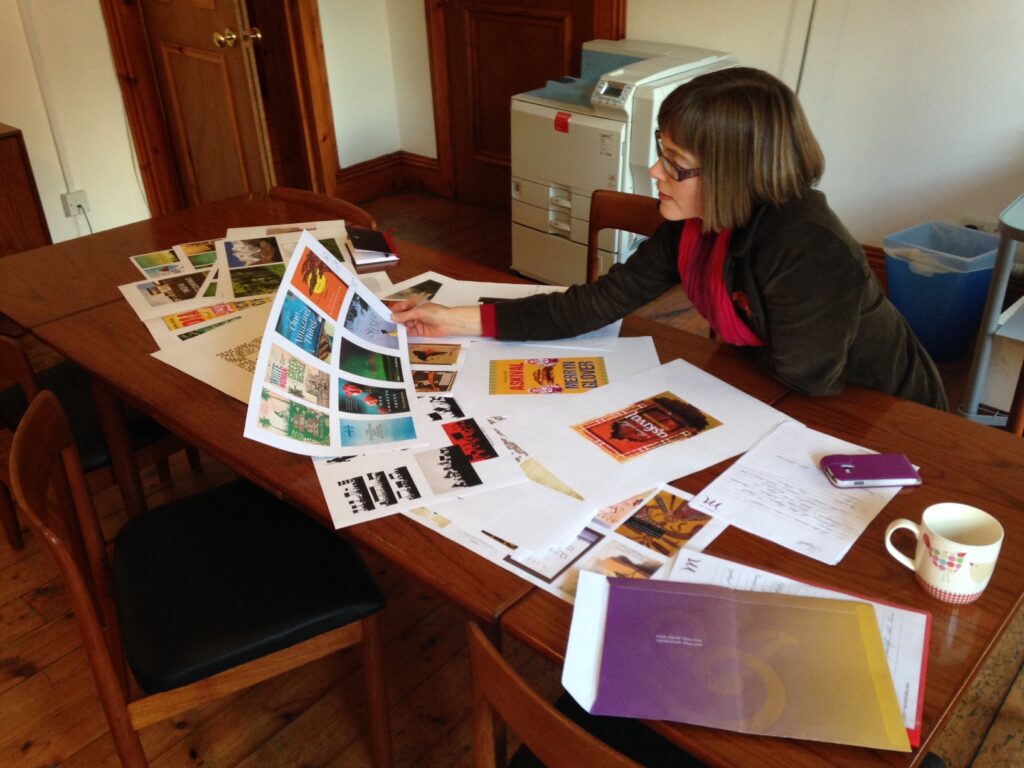
At Freight Books, 2013
We talked about how cover designs work: they should not attempt to tell the story, but to tell the reader what kind of story this is. Primarily, they need to draw people to pick it up and flip to the blurb or the opening pages. It’s an inviting doorway into the world of the book. So, there was an immediate challenge with mine. The novel is set entirely in India but the title – A House Called Askival – references Scotland. It’s because the colonial bungalow at the centre of my story was built by a Scottish army captain and named for a mountain on his native island of Rum.
Freight added ‘A novel’ to the title, lest there be any doubt, and set out to ensure the cover signalled ‘India’ loud and clear. Among the mock up options was a photo of an old wooden door in an elaborate Moghul frame. Of course, it was nothing like the creaking screen door of Askival, falling apart for much of the book, but I loved it. A small lock held its weathered panels shut and spoke perfectly of the secrets of house and family. My only concern was its vibrant orange pallette. To me, this spoke of the heat and intensity of the plains, not the cool, quiet of the hills in autumn. The story takes place almost entirely from August to October, with monsoon so dominant she is like another character. I suggested greens, blues and greys; trees and mist; a ruin. Apparently, according to Freight, green covers don’t sell well. Who knew?
A few weeks later, they emailed a completely new idea. “We commissioned an illustration which is quite painterly – at once saying literary and also ‘epic’. We went with the girl only as this reflects the primary readership and there was a danger of a man and a girl being too ambiguous, in terms of what their relationship is.” A red-headed teenager in skinny jeans stood gazing out at the mountains. My heart plummetted. It was skillfully done but all wrong to me. Sure, my American character Ruth is a teenager for much of the story, but her father is equally important, as is the wider story of the Indians they live amongst.

I immediately sent the design off to a handful of folk who had read it and asked for their opinions, not giving mine. They were all apologetic about their honesty, but I was relieved. I emailed the responses back to Freight with the subject line: Everything But the Girl. The comments included:
‘A cross between M M Kaye’s Far Pavilions and a work of teen fiction… Escapist, dreamy. Not quite the work of a serious adult literary novelist?’
‘Will this look like chic lit? Doesn’t capture the strength of the book. Men wouldn’t pick it up.’
‘I think the figure somehow diminishes that sense of mystery and turns it more into a girl’s adventure in the mountains. Makes it look a bit lightweight.’
I added, ‘Yes, the story contains a moody teenage girl, but a huge amount more. Three of the main characters are men. The story includes a whole chapter on hunting, the devastation of partition, the communal violence of both ’47 and ’84, Gurkhas, murderous mobs, a shooting, a lynching, a fatal fall, the breaking of religious taboos, sexual transgression… and so on.’
I accepted that most book readers and buyers were women, and that so-called ‘women’s fiction’ is commercially successful. Its covers often feature women, often gazing off into the distance. It looked to me that Freight were trying to position Askival in that market. While I would welcome higher sales, I wasn’t convinced the ploy would work. There is a risk the wrong readers choose it and are disappointed and the right readers never discover it. Yes, the cover needs to draw the reader, but the book then needs to deliver on that promise. At the end of my email, I asked if we could revisit the Moghul door. Bright orange no bar.
To his credit, Adrian phoned me immediately and said not to worry. The Girl was out, the Door was in. It soon graced the hardback, in slightly more subdued tones, with overlaid paisley corners, and a font hinting at Devanagari script. No way anyone could miss the India signs or the sense of intrigue. I loved it and readers did too.

A year later, Freight published the paperback and took a radically different approach. Coming out in May and featuring in WH Smith’s travel bookshops, it needed to look like the perfect holiday read. This time the cover was a bold grid of zingy colours, clean capitals and small, but striking images. The ornate verandah of an old colonial building particularly excited me as it is a photo of the actual Mussoorie library; Ganesh the elephant god signalled the religious themes; an Indian woman’s eye was suitably ‘Come hither’; the Himalayas were there and – in an elegant nod to the hardback – an old lock, which sat on the spine as well. I was thrilled.
My readers were divided. Those who had passionately loved the stately mystique of the first cover (including some who had also seen the dreaded Girl) could not accept this jazzed-up imposter. For them, the story was forever framed by the crumbling splendour of a musty Moghul arch and not to be cheapened by day-glo. New readers, however, jumped at the paperback and featured it on Favourite Cover Design blogs.
For this article, I managed to trace Kulbir Gharra, the designer of both those covers and invited her reflections.
 “It’s been almost a decade, but A House called Askival will always hold a special place in my heart as it was the first title that I designed covers for at Freight books. Highlights included putting together the mood boards as I love gathering inspiration with a sense of freedom and play. This is possibly the most important stage in the process for me, as it’s where the concepts are born. I’m Scottish-Indian, so with the setting of A House called Askival, you can imagine the endless possibilities in colours, imagery and textures. My excitement was on another level with 15 pages of source material! I was thrilled to hear that some of it struck a chord with Merryn, the person I had to impress and whose voice I had to convey. That enthusiasm fuelled both the hardback with the old wooden door and lock and the paperback, picking up the pace and conveying the story with a renewed perspective. Even now, I find myself imagining A House called Askival as a film. Who would direct it? Who would feature on the soundtrack? Most importantly, what would the film artwork look like? Hold on, I’ll just refer back to my 15 moodboards.”
Two years later, sadly, Freight Books folded. I got the rights back, re-uploaded to Amazon and bought the remaining stock. Fast forward another two years and those copies were nearly gone. It was time for a new edition and a new cover. By then, my second novel, Of Stone and Sky, had come out with Polygon Books and I had been so captivated by the cover designed by Abigail Salvesen that I commissioned her to do the next iteration for Askival.

Of Stone and Sky design by Abigail Salvesen
I wanted to echo elements of the new novel to bring a unity to the titles. They would have the same fonts, complimentary palletes and overlapping textures to create a landscape. Mountains are my heartland and important to both novels, so that would be another resonance.
The challenge, again, was to suggest India. Abi used hand-made paper and Indian block print textures, but these were subtle. Testing the cover in a Facebook group revealed that while most people loved the design, few recognised the setting. I asked her to put a ghostly ruin in the foreground, but it suggested horror, so we swiped that. I then plumped for a simple gold cut-out of a Hindu shrine which not only stamped the location clearly and hinted at the religious elements, but also added an eye-catching splash of brightness.
Here are Abi’s thoughts. ‘I was delighted when Merryn asked me to create a new cover for Askival to pair with my design for Of Stone and Sky. I so enjoyed designing that cover and Merryn had been a pleasure to work with. In my experience, working independently with authors tends to be more straightforward than the often drawn-out and contentious process of cover approval within a publisher! We had a shared vision for the design from the start; a rural Himalayan landscape rich with texture, bright colours and Indian patterns. Merryn provided some stunning reference photos and her own experience in India was helpful in picking out certain elements of the scene – the native Deodar trees, and the iconic shape of the shrine – that helped to convey the setting more clearly. The illustrative style intends to reflect Merryn’s evocative writing, and the finished cover will, I hope, draw readers into her wonderfully vivid and poignant story.’

It was a hugely rewarding process for me to work directly with a cover designer, but also to benefit from the experience of the preceding covers. As I launched this new edition on the 75th Anniversary of India’s Independence in 2022, I was excited to welcome new readers through the door of A House Called Askival.
Available in paperback, harback and ebook wherever you get your books and personally signed copies in my store here.
This article first appeared in Spine Magazine.
Set in North India and spanning 70 years of recent history through the lives of one family, A House Called Askival is ultimately the story of a father and his rebel daughter seeking reconciliation before he dies.
James Connor, burdened with guilt from a tragedy during Partition in 1947, has dedicated his life to serving India. His estranged daughter, Ruth, believing she fell below her American parents’ missionary calling, rebelled as a teenager. This triggered her own devastating experience during the 1984 anti-Sikh riots, following the assassination of Indira Gandhi. After 24 years away, she finally returns to Askival, the family home in the northern hill-station of Mussoorie in Uttarakhand, to tend to her dying father. There, both must confront the past and find forgiveness if they are to cross the gulf between them and be at peace.
Get the book
Click on the Buy Now button to see purchase options, including personally signed copies direct from me.
You can also ask any bookshop or library to order it in by giving the full title and author.
The audiobook is narrated by Indian actress, Shena Gamat, and is available wherever you listen to audio including Audible and Spotify. A beautiful CD sized booklet in a cardboard sleeve is available directly from me, and can be personally signed and accompanied with a Spotify download code.
Reviews & Features here
Book Group questions here
You can read the first chapter here
Read about the four different cover designs in my article for Spine Magazine.
To see what others have said about A House Called Askival, follow the links below. If you’ve read it, please do add your own review on Amazon, Goodreads or other retailer sites. If you would like to feature the book in your publication, site or broadcast, please contact me for a review copy.
REVIEWS & ENDORSEMENTS
“In light of what is happening on the world stage today, A House Called Askival is a book which demands our engagement.” Dr Carol Leon in Wasafiri Magazine A journal of international contemporary writing – Read the full review here
“The central themes — about love, parental influence, hidden secrets, loyalty, and the importance of faith — produce a gripping storyline. And Askival, the backdrop for Ruth’s heartbreak and redemption, is where all deception is stripped aside, and the true cost of sectarianism is exposed.” Church Times – Read the full review here
‘There are authors like Jhumpa Lahiri, Amitava Ghosh, Salman Rushdie, Neel Mukherjee, Kiran Desai, etc, who have brought alive this country… I would gladly put Merryn Glover’s name on the same list of authors who could represent India so vividly with it’s colors, scent and culture along with the history.’ Aditi Saha on Bookstop Corner – Read the full review here
“Askival is just what the best historical fiction should be: the individual story from the heart of great events. She does it with humour, compassion, and an acute sense of moral drama. Excellent.” Jonathan Falla author of The Craft of Fiction
“It wrestles with battles for independence both personal and national, and with the shocking fallout, in families and in countries, that ensue wherever power struggles take place. I was transported to the monsoons of Mussoorie, a hill station in the Northern State of Uttarakhand… Glover gives us an epic and raging sweep of history through many eyes, for there are no victors. The road to independence and its aftermath is indeed a bloody and complex process.” Northwords Now – Read the full review on Page 20
“Glover understands houses are never just houses. Askival will break your heart.” Cynthia Rogerson, author of I Love You, Goodbye
“It is so very good – the writing, the characterisation, the thematic concerns and the impressively subtle management of a complex structure. I also found it very moving.” Sara Maitland author of The Book of Silence and Gossip from the Forest
“a wonderfully involving, moving and enlightening novel… a moving tribute to India with its struggle for peace and independence” Joanna Baird on Portobello Book Blog – Read the full review here
‘History is blended into the narrative to add to the overall understanding – what Partition meant for millions of people and how the conflict between religions flared up and caused so much strife between peoples. And it is a story about family, about rejection and loyalty and so much more.’ Trip Fiction – Read the full review here
‘Merryn Glover is quite simply a wonderful writer; honest, perceptive, with humour, a zest for life and a love for people and nature. She knows how to keep her readers turning the pages. At times she writes like an angel.’ Dr John Dempster in The Complicated Evangelical – Read the full review here
‘If India interests you in anyway I recommend this book. The imagery created by Glover is exquisite and the book has a lot to offer.’ The Literary Snob – Read the full review here
‘The star of it really is India – its sights, sounds and smells, and turbulent history from Partition to the death of Indira Gandhi.’ Book Reviews Online – Read the full review here
“addresses the political and personal turmoil of religious conflict. Spanning the partition to the present day, it looks at historical events through the lens of three generations of one expat family and tells the story of a father and daughter seeking peace with each other and with their past.” Daily Telegraph
FEATURES
“Writing Partition: Merryn Glover on History, Home and the Hill Stations of India” – Interview with Joanna Penn on the Books & Travel podcast. Read the post and listen to audio here. Watch on YouTube here.
“It’s an inviting doorway into the world of the book.” Article for Spine Magazine about the four covers of Askival. Read it here
“It was beside an outdoor fire in Mussoorie, in the presence of stars and giant pines, that Kavi recited the verses from the Sufi poet, Bulleh Shah, that became the opening of my novel.” Article for The National newspaper about my interviews with eye witnesses of India’s Partition in 1947. Read the full article here
‘The World in My Kitchen’ Article about the cookbook in the novel on My Reading Corner
“Anyone who has made a home in another country and culture will relate to the novel’s exploration of being a stranger in a strange land and yet falling in love with it and being forever marked by it.” Asian Books Blog – Read the full interview here
“But what has never changed about Mussoorie is its beauty.” Article on the book’s setting for Linda’s Book Bag
‘One of the big themes of Askival is relationships across religious (and cultural) boundaries and the need for a deep understanding of one another in order to find peace.’ Asian Image – Read the full piece here
‘Telling a truthful story of Partition.’ Article on Books for Scotland
“Writing it was a way of returning to a place and an experience that profoundly shaped me. The book is all made up, but it is also my story.” Interview for Moniack Mhor, Scotland’s Writing Centre – Read the full interview here
I have a bright red hand-written postcard on my desk. It reads: “Dear Merryn, How lovely to write, write, write! Everything is online at the moment, which is so fantastically useful, of course, and also rather dull! I was so amazed at the wonderful three way coincidence that Askival created. What a lovely thing. Wishing you a happy day. Speak soon, Love, Kat”
The coincidence was one of those joyous, surprising gifts that arrive just when you need a boost. It began when Kat, a perfect stranger, ordered A House Called Askival via Amazon. I sent the book, enclosing a personal note, and was delighted to get a message of thanks and a request for another copy for her friend, Dave, who had connections with Nepal and Scotland. I sent it to her, inscribed to him, and Kat and I struck up an email exchange about life in lockdown with two sons. Mine are home from Uni and entertaining themselves making music and mess in equal measure, while hers are still primary age. I admired her cheerfulness and creativity with home-schooling and how she makes time for reading in the midst of extra-busy motherhood. I shared with her the anthology Stay at Home! Poems and Prose for Children in Lockdown and was chuffed when her boys’ Head Teacher used it in her Google classroom to inspire creative writing.

It turns out that Kat’s book group in the south of England are reading Askival. It was suggested by a member of the group who is the mother of the partner of a former colleague of mine from Kingussie High School! Word does get around. That in itself was a happy coincidence and plans are afoot for me to meet the group via video when they’ve finished it. (I’ve already met with a US book group via Facebook Messenger video, and it was easy and fun. Do get in touch if you’d like me to meet with yours. Lots of platforms and formats possible and completely free!)
A few days later, I dropped an email about a Society of Authors question to a writer contact whom I’ve only met online and got an immediate reply: “How strange that you should write today! Last night a friend gave me a signed copy of Askival inscribed ‘For Dave, enjoy this journey to India’. I don’t think she knows I know you. I can’t wait to read it.” As I said in my reply to him, what a weird and wonderful circle; what a small and beautiful world.

Kat & son sharing Askival smiles
It still gives me a thrill every time a new reader discovers A House Called Askival. Eight years in the making, it was originally published in hardback in 2014 by Freight Books with the paperback coming out the following year. I have so many happy memories of those two years and the book events which started at the Cup Tea Lounge in Glasgow, which had once been the Bank of India – how fitting! And to celebrate the paperback launch in 2015, we climbed Askival on the island of Rum, left a copy on top registered with BookCrossing and enjoyed what happened next:
Then in July of 2015 I had a two-week, Do-it-Yourself book tour of North America, sparked by an invitation to speak at my Indian high school’s reunion in Minnesota. Arriving in Boston on US Independence Day, I went on to Chicago, St Paul and Toronto, re-connecting with dear friends from many eras of my life and making so many new ones. You can read the story of that very special time here.

Before my event at SubText Books, St Paul
Even better than a new reader is when they tell me what the book has meant to them. Here’s a message from a teenager right after launch:
I just finished reading Askival.Yes, it’s 12:30, I stayed up to finish it because I couldn’t put it down… I don’t think I have an adequate vocabulary to describe how I feel about it, I just love it a whole lot. I just needed to tell you that I hate you for making me so sad but also congratulations because it’s a beautiful kind of sadness.
And here’s another from last month, from a man in his 60s:
Dear Merryn, it’s midnight, my wife is asleep, I’ve just reached the end of Askival and I’m lying here howling—well, not out loud, but certainly requiring a large handkerchief. So, so beautiful, I can almost feel that dawn breaking. Thank you.

Sunrise in Mussoorie, where A House Called Askival is set. Photo: Steve Alter
And there have been many in between. I treasure every single response, keep as many as possible and reply to everyone who writes to me. There are also a goodly stack of reviews online including from India, such as the blogger BookstopCorner: “This heart-touching story provides a stunning outlook as well as the most remarkable view on my very own country and it’s enriching history.” Amazon and Goodreads give a wide range of reaction and if you haven’t already, adding yours there is a huge help to me. Even a short sentence makes a big difference.
This feels like a good time to celebrate A House Called Askival. It’s fifteen years since the summer I started writing it, seven years since I signed that first exciting book contract and five years since the paperback tours. More significantly, September 5th marks 100 years since Mahatma Gandhi launched the Non-Cooperation Movement in his first campaign to move India towards self-governance. The struggle took 27 years but at midnight on August 14th & 15th 1947, the newly-formed Pakistan and India gained independence. These events are a key thread in Askival, which explores issues of religious conflict on political, family and individual levels and draws from the stories that eye-witnesses shared with me. Following three generations of an American family and their close Indian ties, the book is ultimately about reconciliation.
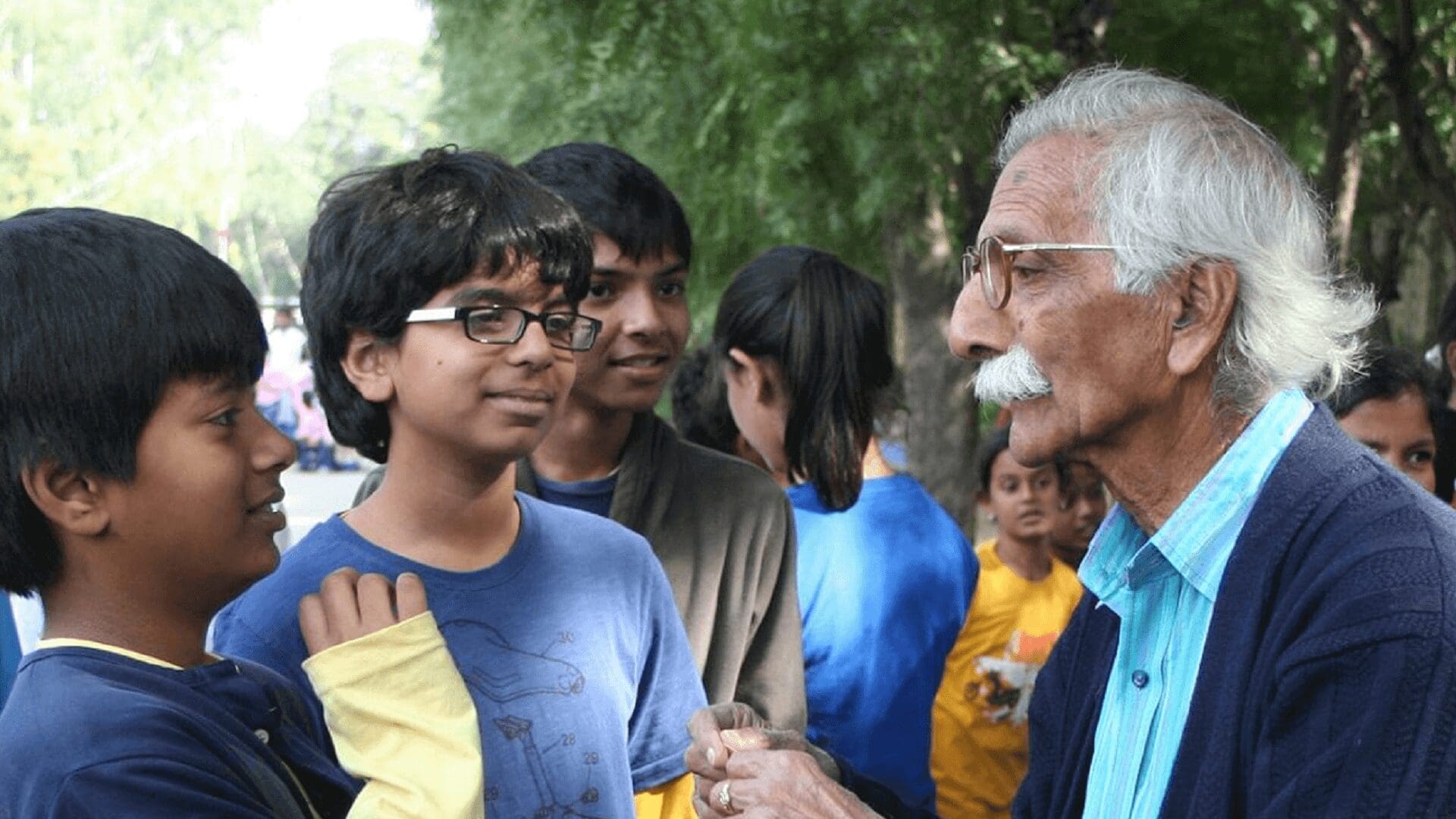
Kavi Singh, one of my informants who was in Mussoorie in 1947
To mark Independence celebrations, and South Asian Heritage Month in the UK, I’m making the e-book available on Kindle from 9th to 15th of August at the discount price of 99p UK / 99c US (and equivalent in other locations). For anyone who still prefers a paper copy, I have almost run out of Freight’s original edition, which I bought when the company went under, but I am setting up an account with a printer who supplies online retailers, bookstores and libraries. You can get a personally signed copy from me and any orders received by 15th August will get the special discount rate of £6.99 + postage – while stocks last! Drop me a note if you’re keen.
Till then, thank you again to everyone who has bought or borrowed A House Called Askival, read, recommended, reviewed and written to me about it. And if you haven’t already, I would love for you to discover it. A story only exists in the telling, and for that there must be a listener. I am honoured each time a new listener lends me their ear, and even more when they tell me something of their story in return. Do join in.

Thank you for reading this post. To stay in touch with upcoming book and event news, I’d love you to sign up for my newsletter here and/or meet me on Facebook, Instagram or Twitter. And hopefully, one day, in person!